Creative Brief

moodboardName

Lost and Found

Platform

“Lost and Found” will be a documentary web series for potential markets like YouTube or Netflix.

Synopsis

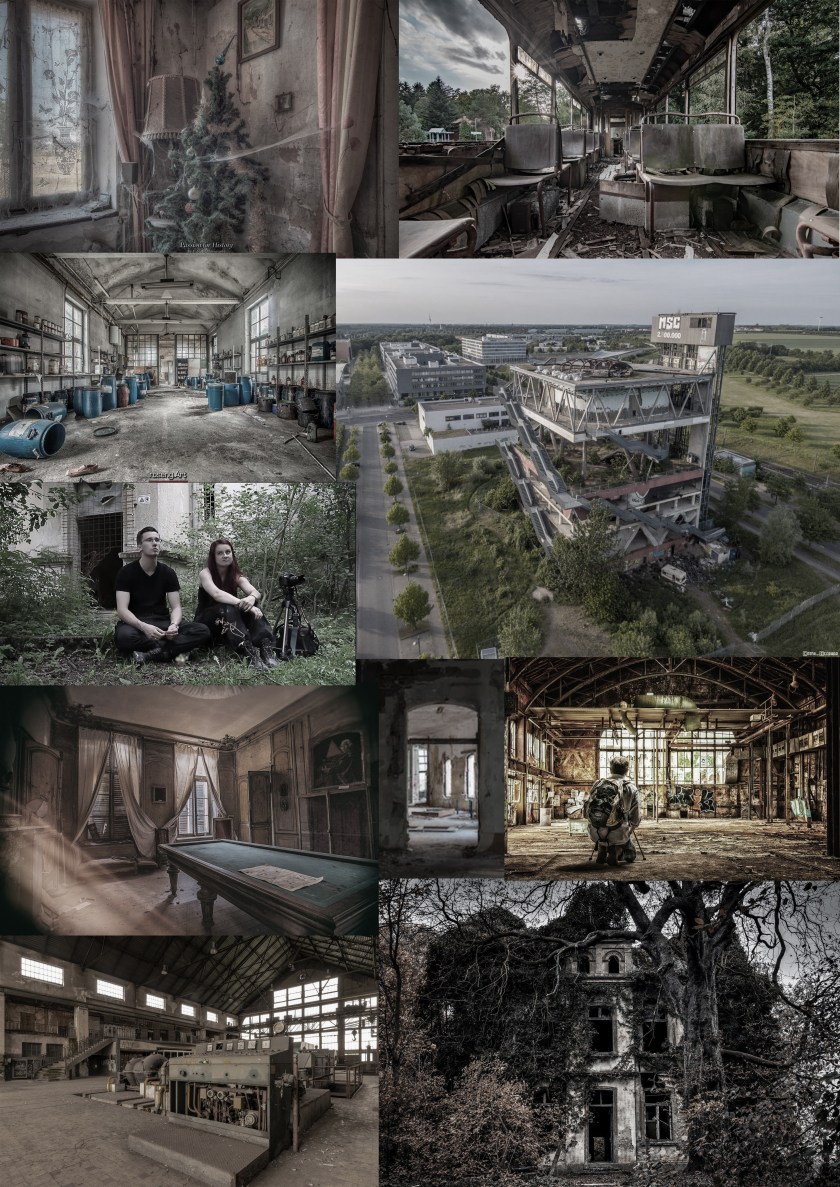
No matter where you are going in the world, all over our cities there are hidden treasures we call “Lost places”. It’s about abandoned buildings and structures, that may have been forgotten by the people, but if you look closely enough, every single one of them tells a story.

This is where Urban Exploration comes in. A huge trend for photographers all over the world. With their illegal, but thrilling hobby, they not only show the devastating decay of these buildings, but every single photo tells a new story of what may have taken place years ago.

In every episode, “Lost and Found” will follow the daily path of Urban Explorers, taking you to a different place. Telling a story about what happened and how its history relates to the city they are in.

Creative Confidence – A critical reflection

Over the last weeks, I have got myself into a lot of research work for my major project. The more I poked around in various books, videos and websites, the more I started to feel an unpleasant sense that I already knew from nearly all of my creative projects before. It was insecurity. The worry of not doing enough work, doing it wrong, miss the topic or come up with ideas that nobody would care about. But as I found out, this is an all-time problem in creative work that everybody who makes a living with their intellectual property experiences sooner or later.

David Kelley describes this feeling as a “fear of judgement, […] the fear of not saying the right creative thing, you’re going to be judged.” (Kelley, 2012). In his TedTalk, he points out his anger about peoples creativity being suppressed by negative feedback. And oftentimes people would get more an more insecure about their inventiveness simply due to this fear of judgement. They would be unhappy about their own work and come into a creative dead-end. Thankfully, Kelley delivers a solution. He quotes the psychologist Dr.Albert Bandura in his term “self-efficacy”. The process of going through a series of small steps in order to gain more an more experience of success and “turn fear into familiarity” (Kelley, 2012).

For many people, this problem oftentimes has its roots in childhood. In his Book “Creative Confidence: Unlocking Your Hidden Potential”, Kevin Noble describes that “everybody is born with a creative gene” (Noble, 2014), but the fear of a negative response holds most individuals back, which harms their confidence. Judgements that we experience in primary school can shape the way we rate our creative abilities lifelong.

“The fear of being judged can turn adults whether student or CEOs into creatives types who keep their ideas to themselves.” (Noble, 2014)

This verifies my experience with creative work. From the fear I experienced while working on various projects in the last years, I realized that the more feedback you get for your creative work (may that be positive or negative), the more confident you get. So you’re self-doubt disappears and you dare to come up with crazier ideas, which pretty much is a recipe for creative work.

How to build your creative confidence | David Kelley, 2012 Available at: https://www.youtube.com/watch?v=16p9YRF0l-g

NOBLE, K., 2014. Creative Confidence: Unlocking Your Hidden Potential. Speedy Publishing LLC

A critical incident – An example of a critical reflection

Finding a topic for my major project was hard. Not only is it the omnipresence of content on the internet, that makes it look like everything that’s possible has already been done. It’s rather the question of what general topic should my piece of work be about. Setting a topic for my final project means having to spend a huge amount of effort and countless working hours on one specific topic. So I certainly did not want it to be some kind of rubbish that I would be sick of after a week of research. My topic had to be interesting for me, that was a critical requirement.

My critical incident was a dinner at Yates with my friends & family. My sister and I were discussing the problem I had when she started to brainstorm thousands of ideas to me. I was taking notes enthusiastically when our ideas started to get crazy: “A documentation about “Pokémon Go” as a travel guide”, was only one of a variety of weird ideas.

But the point is that talking to another person and exchanging ideas is an excellent way of refreshing your brain. Just talking to a family member, who would throw more and more ideas at me helped me enormously. We would combine all of our different ideas, taking the best of both worlds. This helps because sharing each other’s ideas actively encourages reflection of one’s own and creating new ideas from mixing existing ones.

“By openly sharing ideas and work, a team’s creative output is exponentially more than the sum of the creative outputs of all individual team members. While swarm intelligence is based on equal sharing of information, swarm creativity is founded on sharing ideas openly.” (Gloor, 2006)

This is how I ended up with my Lost-Places-and-how-they-tell-a-history-idea.


GLOOR, P.A., 2006. Swarm Creativity: Competitive Advantage through Collaborative Innovation Networks. Oxford University Press

Research proposal

My Idea

As I mentioned in my last blog post, my idea is to do a web series that combines traveling, urban exploring and history. The main topic of the series will be “Lost Places”. In this production, I want to thematize different cities all over the world and show one or two different Lost Places per episode. These should preferably have an interesting story that represents the history of the city they are in. Ideally, the show will not only show these places but explain the viewer its origin, development and potential reuse over time, making the whole cities history interesting to follow.

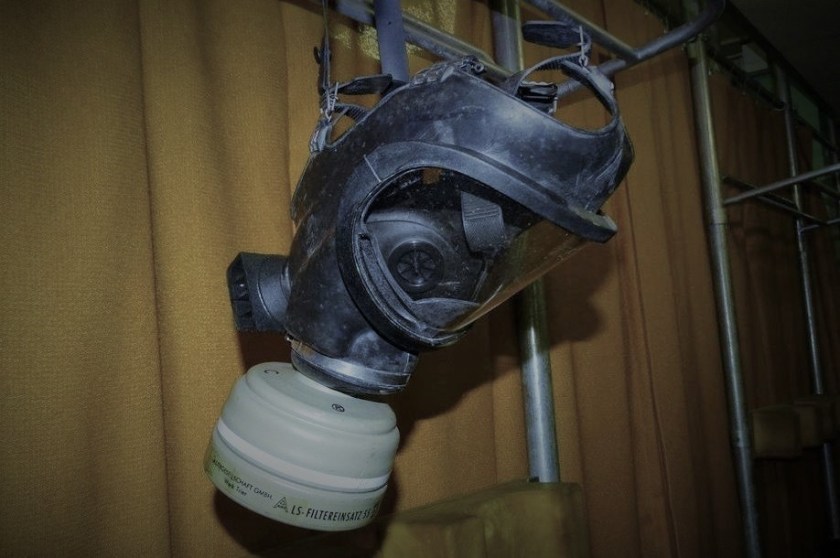
My Motivation to do this project comes from a personal matter. As a passionate hobby photographer, I enjoy exploring interesting places, that make a good image. With me being not the only one who likes to do this, it became a trend of many photography-enthusiasts. Not always legally, people make their way into abandoned factory buildings, creepy haunted houses or hidden tunnel systems, capturing everything with their cameras. But what really excites me is not only the terrifying look of these locations but what they were built and used for. But finding all out all of the information and backstories does not come without an intense research.

Research

My major questions for starting this research deal with the term Lost Places itself and what the web series is going to look like:

  • What are Lost Places/Urban Exploring in general and which ones are interesting and historically valuable enough to be featured in the show?
  • What do other web series do to amaze the audience and stand out in the market? And what style and structure should the episodes have to archive this?
  • How can I combine city history with the topic of Lost Places?

The problems with answering these questions are mainly the lack of secondary sources. With urban exploring being more of an underground culture, I will have to do a lot of primary research like:

  • Look into Lost-Places-Forums on the internet
  • Interview photographers, who are experienced with urban exploring and Lost Places
  • Interview people, who are familiar with the locations featured in the show
  • Look for similarities in popular web series that can be helpful for creating mine
  • Make an internet and literature research about cities that could be entertaining in terms of history and variety of Lost Places (secondary)
  • Go through books explaining the history of the featured cities (secondary)

Business Context

The platform to deliver my content will definitely be the internet. With all its variety of subcultures and younger audiences, YouTube or Netflix will be the right choice for me to gain maximum attention. Additionally, the series could be promoted via different social media, giving sneak peeks of new episodes or regularly posting travel- and exploration tips.

My target audience will be:

  • People interested in culture or traveling/History of different places
  • People who like to explore unusual places
  • Photographers who are excited about finding new locations
  • Due to the internet as broadcasting platform people from younger generations
  • Citizens of the featured cities

References for my research

  • https://en.wikipedia.org/wiki/Urban_exploration
  • http://lost-places.com/forum/
  • HARRINGTON, R., 2017. Hypersyndication: Maximizing Your Web Video and Podcast Audience. Carpenteria, CA: lynda.com
  • BURGESS, J.(.E., 2018. YouTube : online video and participatory culture. Second edition. ed. Cambridge: Polity
  • LANCASTER, K., 2013. Video journalism for the web : a practical introduction to documentary storytelling. London: Routledge
  • MAIER, R.G., 1994. Location scouting and management handbook : television, film, still photography. Boston, Massachusetts;: Focal Press


A new idea

Since my last idea for my major project, I received some criticism and thought a lot about how to improve it. The idea of traveling around the world to underrated cities and places is not boring, but it seems to be lacking a USP. There are already a lot of content creators that make their living by blogging their traveling experiences, especially on YouTube. So my task was to further specify my idea and find more of a niche.

I still want to stick to my old ideas of traveling and exploring, but I´d like to do a kind of unusual travel guide. The idea is to research lost places, like old abandoned buildings or city parts and present them in the form of a web series. Doing this I want to focus more on the history of these place, rather than just showing them. Every lost place has a history. And by researching this history you can often learn a lot about why it was built, what it was used for, how it got abandoned and maybe even how it was reused and renovated in an impressing kind of way. All of these stories combined tells you a lot about the city it is in.

For example, in my hometown Hanover, there is an old bunker from world war 2, right underneath the central station. During my research, I was surprised by the fact that I, as a city resident have never even heard of it. The bunker has huge dimensions, with originally holding 2100 people. But the bunker was split while building a tunnel with shops after the war. Now being split in half, one part was reused by the German train company to build a backup control center, controlling all of the trains in Lower Saxony. The other half was kept in its original form but also has some interesting stories, like for example being the emergency night shelter for 400 Mexican football fans who missed their train after a world cup game in 2006.

Research

A lot of my production and business related research will not dramatically differ from my old idea. I will still have to care about all of the production aspects myself and create a journalistically valuable piece of entertainment. Also, the audience and the commissioners will stay similar. In my topic-related research, I will have to speak to people who worked at the lost places at the time, this would be the best kind of information source. Also, I will need to do plenty of research regarding the history and potential reuse of lost places, including how to present it in an entertaining style.

Unbenannt

Methods of documentary

In our last lecture, we took a look at a variety of different documentary modes. There are a lot of theories to classify documentaries, however, US American film critic Bill Nichols certainly established the most noticeable one. According to him, there are 6 main documentary modes:

  • The Expository mode, where there mostly is an all-knowing voice of God, guiding the audience through the film.
  • The Poetic mode, that features a lot of emotional shots and editing.
  • The Observatory mode, where the topics are presented as neutral as possible, letting the audience be the observer
  • The Participatory mode, usually featuring a character who’s part of the story
  • The Reflexive mode, emphasizing the relationship between the filmmaker and the audience
  • The Performative mode, mostly driven by the filmmaker’s intention or opinion


Examples supporting Nichols’ theory

Like most national geographic documentaries, this one can be seen as an expository one. Easy to identify by the all-knowing “voice of God”, documentaries like this are often fact-based information, however, the audience is often affected by the filmmaker’s opinion, often exaggerating facts to create a stronger interest.

netflix_original_hip_hop_evolution_1024x1024.jpg

The next example is the Netflix production “Hip-Hop Evolution”. It explains the origins and development of American Hip-Hop Music from its birth in the 1970s to modern rap music in the early 2000s. It is fully accompanied by rapper and moderator Shadrach Kabango aka “Shad”, who contributes by explaining his own impressions of certain movements, styles or artist. This is why I personally see this series as a participatory documentary. The moderator’s impression is part of the story and due to the lack of literature, the show’s sources are mostly interviews. This is likely to influence the audience to take part in the main character’s opinion.

Alternative documentary modes

A slightly different approach do categorize documentaries was made by filmmaker Toni De Bromhead. He concentrated more on the information and content of the film itself rather than the presentation and editing. According to him, there are 4 main different versions:

  • The Linear mode is the classic approach to a problem and solution, often with a character investigating and researching facts and a solid narrative structure
  • The Discursive mode is often used during ongoing events. It typically gives political or general news a cinematic cote
  • The Episodic mode compares two or more different issues to reveal a coherence
  • The Poetic mode concentrates more on cinematography and is a more artistic approach rather than a conventional storyline

Democracy (2007) – An example for the Discursive documentary mode

Conclusion

Few people have yet made the effort to create different categories for documentaries. The fact that I had a hard time finding any opinions criticizing Nichols’ theory verifies that his approach to categorizing documentaries is a widely accepted concept. I personally think that his categorization makes sense and does a good job in interpreting the intention of the filmmaker.

Underrated places

Finding an idea

The very first step of my major project is – of course – the idea. The last few weeks I always carried my notebook, exchanged ideas with friends and fellow students, and tried to connect various thoughts to a realistic concept.

The basic conditions were very clear to me:

I want to do a web series because I think it’s the most suitable concept for our current time younger generations. Furthermore, I personally love the internet and its possibilities. With YouTube being one of the biggest and most widespread entertainment sources of my generation, it is the perfect platform for my intentions.

I want to do it in the form of a documentary. Personally, I am way more excited about factual productions, simply because I know that everything I see is really happening. These are the formats I personally love the most, so I tend to create them myself, simply because I am most interested in them

Organize my Ideas

After questioning my personal interests and what I am most excited about, I came up with a couple of different Ideas. Most of them contain my second favorite hobby: traveling. Combining traveling and filmmaking is not as easy as in sounds – most of the obvious Ideas are already existing or simply boring. So, I tried to combine some of my ideas, to come up with something new and interesting. So far, my thoughts looked like this:

A web series, about traveling to different underrated destinations. Cities, that often aren’t tourists first choice, because they look uninteresting at first glance or have a bigger neighbor stealing their attention. This documentary-style web series takes the viewer to various places all over the world and reveals exciting attractions, food, culture or history. Simply to show the average traveler that you don’t have to visit a tourist hot spot to have an unforgettable vacation.

Production research

I already gathered plenty of knowledge from internships, my college in Germany and some private films. But this time it will be based on intensive research, long-term planning, doing interviews on my own and creating a journalistically valuable piece of entertainment. This will be the first time I have to manage video and audio production, as well as editorial execution in a professional matter.

Topic related research

I will need to do plenty of research for the places who will be featured in the series. Thinks like history and culture of the country and city the episodes will take place in are essential knowledge to find out what sights are interesting and which people are worth to be interviewed.

Business-related research

Who would be interested in commissioning the idea?

  • Companies which have tourism-related content as their business models, such as TripAdvisor or Airbnb.
  • Tourism departments or city marketing

Who would be the audience?

  • YouTube users interested in culture or traveling
  • People who like to travel a lot
  • Due to the internet as broadcasting platform people from younger generations
  • Citizens of the featured cities

Why would anyone give you money to make it?

The series would be an excellent tool for tourism marketing because the show features destinations that normally lack attention from the masses

What would be the delivery Platform?

As mentioned before, I am aiming to a younger audience who may be interested in traveling. Online streaming services like YouTube or Netflix as well as social media websites would fit my audience perfectly and are the platforms I personally have the most experience with.

DSC_0361

The sound around us

There’s a brilliant TED Talk by Julian Treasure about the sound that surrounds us every day and listening itself. If you think about it, wherever you go there is a scenery of different sounds playing together. The result is a mixture that makes you identify your location even without having to see it.

The problem Julian Treasure points out is that in todays society, people tend to forget listening. We use headphones to isolate our senses while we forget how amazing a sound scenery can feel like. Fortunately, Julian introduces us to some easy practices that allows us to train our hearing. For example: Try to isolate the separate channels you can hear in an environment and make out where they come from.It is amazing how many different sounds you are able to hear.

Who doesn’t love work?

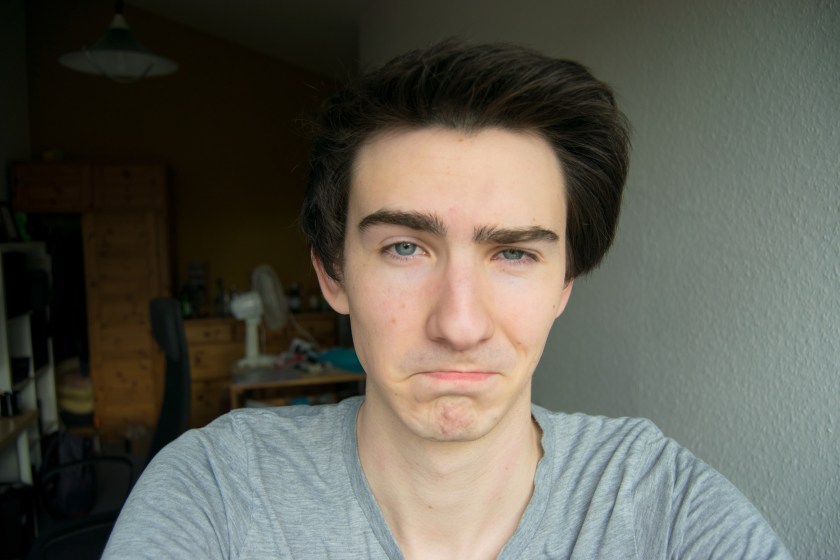
Describe yourself! This is my very first task in my studies at Solent University. Well, and it turns out to be quite a difficult one.

Don’t get me wrong, I know myself very well, but the more I think about my characteristics, the more I realize that there is one enormous weakness that used to sneak into every little aspect of my daily life for the past 20 years.

I am a very lazy person.

I used to describe myself as a master procrastinator. My brain often likes to do things last minute which leads to reducing the upcoming work to the bare minimum. Do I have to point out that this is a risky technique? Experience has shown that procrastinating makes you lose interest in something and the once fascinating project slowly becomes an annoying yet-to-finish task.

My goal for the next year is to get loose from this bad habit and use my opportunity here at Solent to make lots of new experience very easily. Filmmaking, recording, and editing have always been my favorite activities.  Since middle school, I was passionate about filming. With upcoming media like youtube, I was fascinated about creating videos myself and experimenting with technology and editing software. That’s why I chose to study communications design and doing two internships as a media designer. Even after years, creating videos is still my biggest hobby and Youtube remains one of my favourite sources of entertainment.

The point is that I can be very ambitious about something that really interests me. And I’m positive that one day I will be able to make my hobby a job so I can do what I love for a living.

DSC_0091